In great news, at a personal level, I finally have the ability to move into a new home–within a small city surrounded by wetlands. I have lived along coastlines my entire live, encompassed by peat, moss, turtles and frogs. Being said, I also have firsthand experience of the unfortunately rapid decline of this beautiful biome.
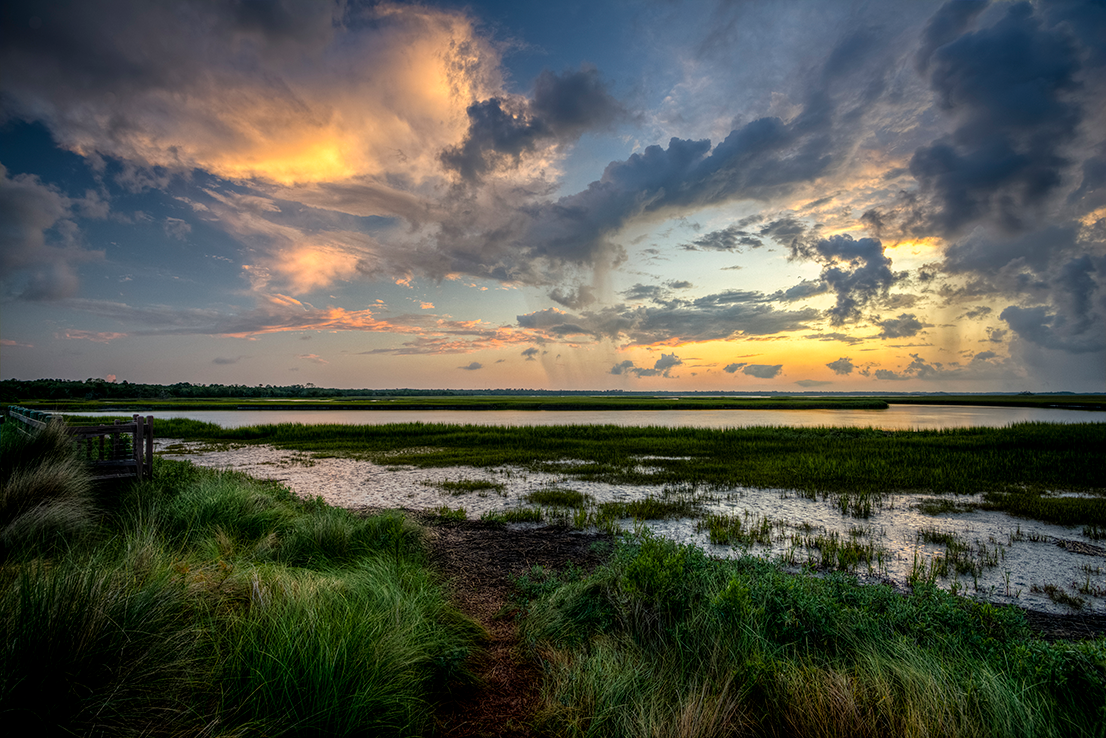
Photo from Kiawah Island Community Association
Although, I feel as if discourse surrounding the degradation of the wetlands often gets overshadowed or ignored. Perhaps this is because many feel irked by the mushy, mustiness of swamps and bogs; the imbedded associations with mosquitoes, potential disease, and even the mythical (e.g., ogres of course); and out of any “body of water,” wetlands do not come to mind when considering the leisure of swimming.
Unless you are a wetlands local, it is unlikely that you will hear about its benefits, and the issues they face. There is a variety of external factors contributing to the loss of this ecosystem, including pollution, microplastics, land privatization, highway construction, and the introduction of invasive species.
The Decline of the Wetlands
The situation is quite bad.
To point out a specific example, let’s talk about the city of Charleston, South Carolina, which is a heavily popular tourist area located around marshes and blackwater swamps.
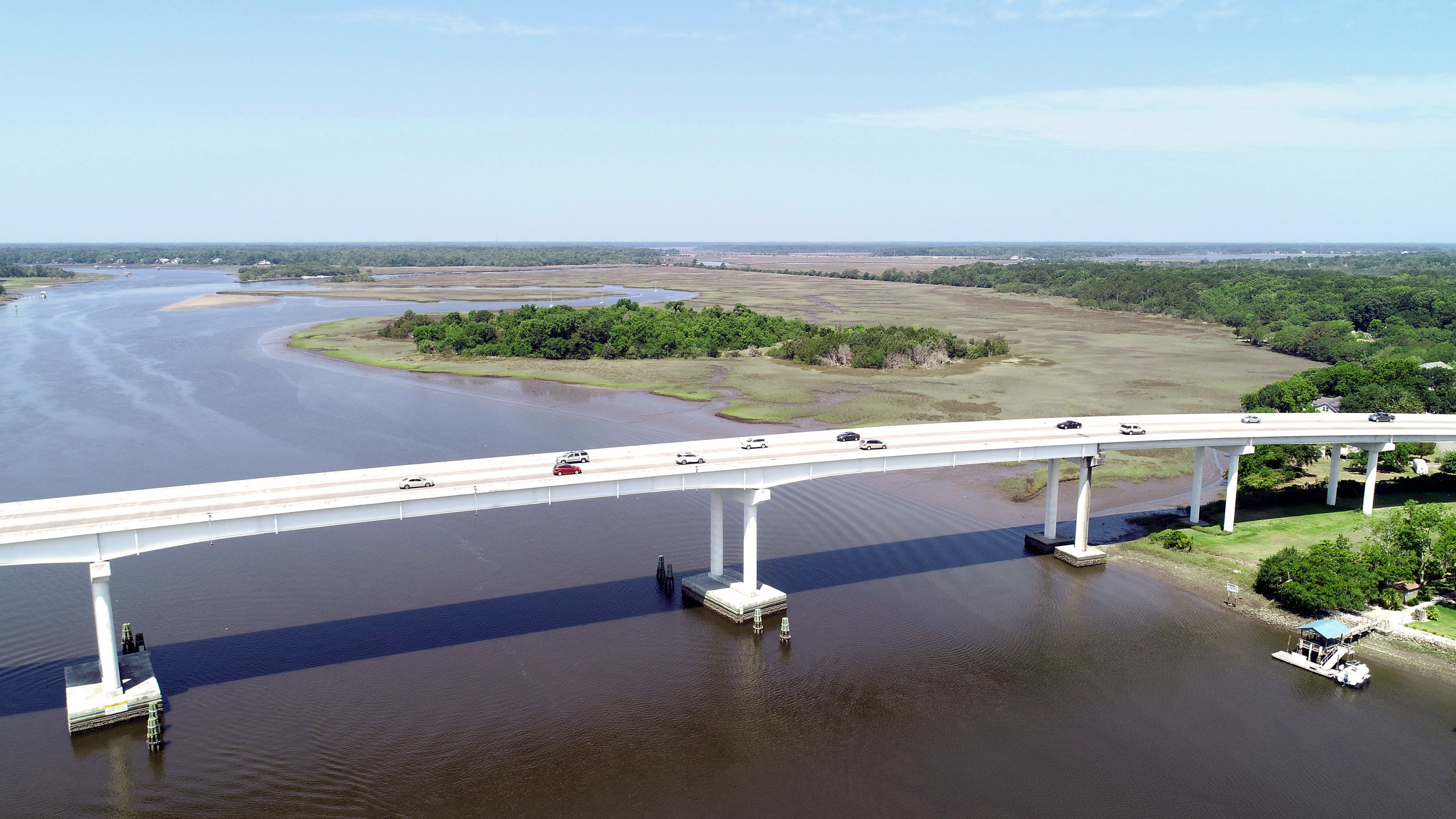
Photo from the Mark Clark Extension website
Last year, the South Carolina Department of Transportation proposed the Mark Clark Extension Project aiming to fill in 38.53 acres of wetlands with the I-526 Extension. The intention is to lessen the density of the infamous Charleston traffic, and “increase safety and mobility.” To be more specific, according to The Post and Courier, “the project would impact 27.49 acres of freshwater wetlands, 0.02 acres of streams and tributaries and 11.02 acres of tidal/Critical Area Waters.” Not only that, but much acreage of James Island County Park will be affected as well, including its public access to creeks and climbing walls.
The funding for this project will be heavily reliant on the 2024 sales tax referendum happening in November. So far, it seems that the issue is heavily contentious, and is being opposed by nonprofits like the Coastal Conservation League. Voting “yes” to re-approve Charleston’s transportation sales tax will cause the 9% sales tax to persist until 2041, with 34% of it going to the I-526 Extension.

Photo from the Charleston City Paper
Here is a link to the Mark Clark Extension Project: https://www.scdotmarkclark.com/
Here is a link to Charleston County Greenbelt Program’s community assessment: https://greenbelt.charlestoncounty.org/pdfs/Mark%20Clark%20ReportFinal.pdf
Finally, here is a piece by the Coastal Conservation League on their view of the Mark Clark Extension: https://coastalconservationleague.org/projects/i-526-extension/
—————
Highway development is only one component towards the decline of the wetlands, in which signifies that wetlands are nothing more than a “nuisance” to human activity.
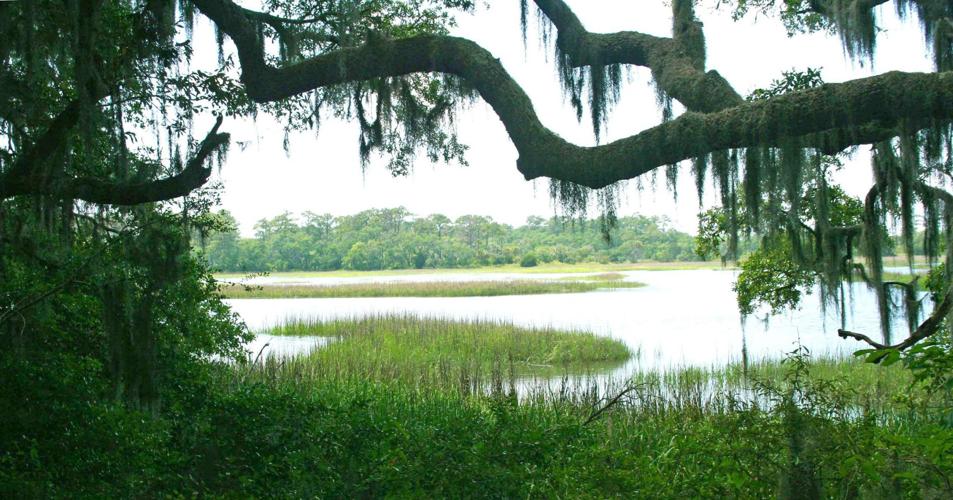
Photo from The Post and Courier
Over 33% of the world’s swamps, bogs, marshes, and fens have disappeared since 1970. Due to this decline, 83% of freshwater species are now facing endangerment and extinction. This is a big deal. In case you are wondering what this means for humankind, the loss of wetlands will dwindle the ability to partake in outdoor recreation, like fishing, hunting, photography, and utilizing its flora for aesthetic, consumption, or healing purposes. Most importantly, however, humans need wetlands for flood, storm, and erosion protection, carbon capture, and to purify polluted water.
It is quite sad. This precious, productive natural resource is facing a lonely abandonment.
—————
Interactive Advocacy
On a lighter, somewhat random note, I recently was able to play a game called Kamaeru: A Frog Refuge that came out earlier this summer.

Photo from Movies, Games and Tech
I enjoy video games, and while Kamaeru is not a perfect title, it reminds me that video gaming can be an interesting, interactive advocacy tool. Many people nowadays play games–or at the very least this hobby has been more normalized–and gaming has the potential to spread awareness of issues that may otherwise be overlooked.
Kamaeru is a cozy “creature collector” that focuses on wetland restoration and the preservation of frog species. It teaches key ideas about carbon capture, how invasive species (e.g., nettles) affect native ecosystems, and how humans can harness the abundant resources wetlands provide, like berries and cattails. In the meanwhile, players can also decorate and expand their “frog sanctuary” and accrue different colors and patterns of adorable froggies. The frogs had been victims of wetland degradation, and the main protagonists Axel and Cleo are trying to reconstruct their home.
Another fun video game is called Kudzu, a modern-day aesthetical callback to the Gameboy era featuring the wicked power of the kudzu plant. Kudzu is a climbing, fast-growing perennial vine native to East Asia, but has unfortunately invaded North America, overtaking and killing indigenous plants and preventing the growth of small hardwood trees.

Photo from Movies, Games and Tech
The game plays in a Metroidvania fashion, and humorously delves into the destructive, almost wizardly abilities of Kudzu, which the player must face heinous creatures and rescue their mentor, Master Zoen. While Kudzu is not particularly a conservation-oriented game, it does offer a creative take on the plant and its real-world dastardliness.
—————
I mention these video games because aforementioned, I think video gaming is a great way to spread the message about something as undermined as the wetlands. Not many people encounter this biome on a daily basis, but it is nonetheless of major significance, and it is an ecosystem I have called home for decades . . .
**Also, to note, I wrote game reviews for both Kamaeru: A Frog Refuge and Kudzu on Movies, Games and Tech! Here is the link to my portfolio there: https://moviesgamesandtech.com/author/kjoliet13/
————————————————–
The Suit of Wands is a signifier for creative approaches to everyday problems. We must harness passion and innovation to incite change.
————————————————–


 Blue Mushroom
Leave a reply to Khloe Turner Cancel reply