Apropos of the 2024 Olympic Games, both media and word of mouth has been spreading concerns about the safety and cleanliness of the Seine River: a massive, 483 mile-long river in which its basin covers a considerable portion of Northern France. It is at the Seine where the opening ceremony occurred; hosting a grad queen-centered fashion vignette, a colorful water display, and a parade of boats holding the vivacious spirits of each 206 Olympic teams. The river is also to host the swimming portion of the men’s triathlon.
The Seine River is known to be incredibly polluted. For centuries, the river has suffered as a reserve for wastewater, “forever chemicals,” and bacteria such as E.coli. Swimming in the Seine has been banned since 1923 — over a century. The Seine, however, is not the only befouled body of water in Europe. The continent has had historic issue with managing agriculture, sewage, and industry runoff, causing an incorrigible slew of toxins.
Think of the Thames that flows through London. In the early stages of the Industrial Revolution, London’s poor sewage systems allowed waste to directly deposit into the river, causing the “Great Stink” of 1858.
According to the European Environment Agency, around 60% of EU rivers, wetlands, and lakes are “not healthy,” meaning notably polluted.
France had spent 1.4 billion euros to prepare and clean out the Seine. One major project was the construction of a large basin intended for capturing excess wastewater and rainwater. Sewage infrastructure and treatment had been updated as well. The Austerlitz train station’s basing, however, became steadily filled with rainwater following last Friday’s precipitation.
To demonstrate that the river has been successfully cleaned, Mayor Anne Hidalgo of Paris briefly swam around in the Seine two weeks before the Olympics began. Despite trying to alleviate concerns, the men’s triathlon has been postponed several times due to the constant need to re-test the water after Friday’s rainfall.
Personal Note
The world still has a long ways to go to fix these centuries-long issues. Water is the giver of life; water makes up most of the human body, and we can learn, heal, and be born from its properties. Yet, humans have become parasitic to the health of the earth’s rivers and oceans, polluting this precious resource to unnecessary degrees.
Have we turned a blind eye to mass marine deaths? To the eras of acid rain? To the increased frequencies of floods and droughts? To the lead and microplastics in our drinking water?
The concerns about Paris’ rivers are valid. It may be costly to clean them and test them so frequently, but it is a high necessity nonetheless. To think that so many urban cities are ineloquently located near “dog water” is a great misfortune, and an ultimate hazard to human health and the flora and fauna around us.
————————————————–
The High Priestess Arcana is a signifier for wisdom and truth. We must remember to pay attention to the circumstances around us, and unravel bitter realities.
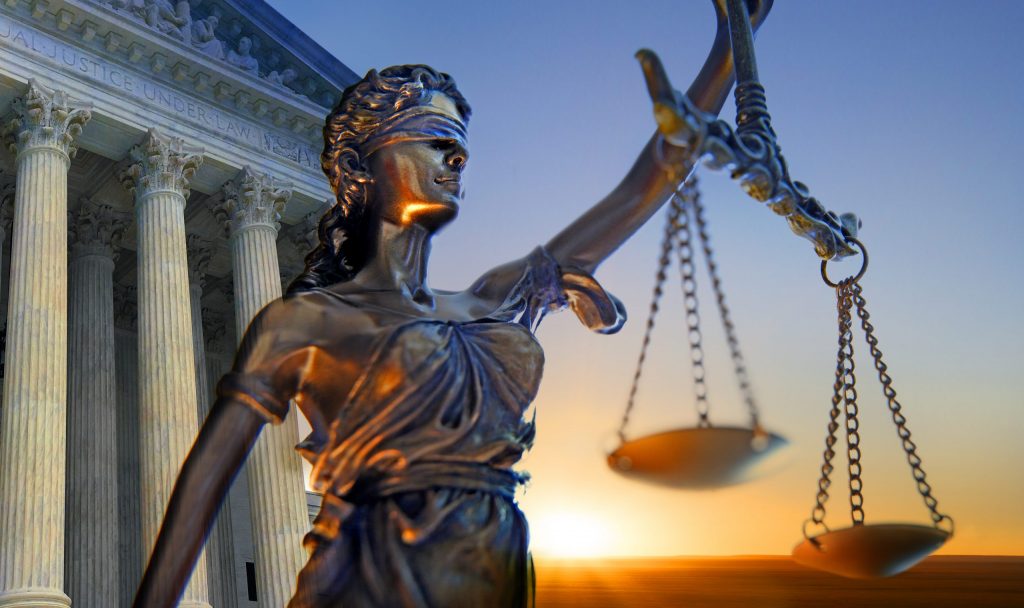
On June 28th, the U.S. Supreme Court overturned the long-standing 1984 Chevron U.S.A., Inc. v. Natural Resources Defense Council Inc. decision, greatly diluting the powers of federal agencies. In particular, this landmark decision hit the Environmental Protection Agency quite hard.
The “Chevron deference” has been cited in over 18,000 cases. The Supreme Court’s decision to overturn this deference may send massive shock waves throughout the federal system–and a sudden shock is hardly without some chaos.
“The decisions are likely to present challenges to preserving the many decades of progress we have made in protecting people and the planet,” says Kameran Onley, managing director of North America Policy and Government relations.
What is the Chevron Deference?
The intention of the Chevron deference was to boost the decision-making and rule-enforcing abilities of government agencies without the threat of legal battle. Specific government agencies would be differed to if a law contained vague or unclear statements. When differing to an agency, they would then interpret the meaning themselves and the corporation or market would have to yield to this interpretation.
The Chevron deference had been heavily utilized by the EPA in cases regarding environmental safety, usually in regards to the Clean Air Act and Clean Water Act.
In 1977, the Clean Air Act was amended to require all projects that would create major “stationary source” of air pollution go through an extensive process called “new-source review” by the EPA. Originally, the EPA interpreted this amendment to mean that even something as small as a single machine–like a boiler or smokestack–could be considered a key source of pollution.
However, during Ronald Reagan’s administration, the EPA changed its interpretation to define the entire building or plant at the major “source.” As long as the plant did not increase the total amount of air pollution output, buildings could work on project rather freely.
The Origins of Chevron
In 1981, the Natural Resources Defense Council filed a petition for review to the U.S. Court of Appeals for the District of Columbia Circuit. NRDC was challenging the EPA’s new interpretation of “stationary sources.” The D.C. Circuit ruled in favor NRDC. Former justice Ruth Bader Ginsberg cited that the EPA’s new interpretation conflicted with the past interpretations in prior cases.
Chevron Corporation, an oil and gas company, had been affected by the EPA’s interpretation of the Clean Air Act. As such, they intervened in NRDC’s case, appealing to the D.C. Circuit’s decision to the Supreme Court.
The Supreme Court, however, overruled the D.C. Circuit’s decision in a unanimous 6-0 vote. It was determined that the EPA’s change in interpretation was completely valid, and the definition of a “source” should not be static. The new interpretation still appealed to environmental protection, but also preserved economic growth, in the court’s opinion. With this landmark decision, the Chevron deference was born.
Essentially, if a law or statute is clearly defined, then the court’s opinion reigns supreme. If a law is ambiguous, then agencies’ interpretations of these gaps are necessary. Chevron had limited the courts’ power to overrule agencies in this case.
What Happened?
The Chevron deference was overturned in the case named Loper Bright Enterprises v. Raimondo.
Loper Bright Enterprises is a New England-based fishing company who challenged the National Marine Fisheries Service. The NMFS required domestic fisheries to pay for the cost of federal monitors that would be assigned to their boats, under authorization of the Magnuson-Stevens Fishery Conservation and Management Act.
Loper Bright Enterprises appealed to the D.C. Circuit, where the court applied the Chevron deference. Then, petitioning for a writ of certiorari, Loper brought the case to the Supreme Court asking: was using the Chevron deference appropriate regarding the NMFS requirement of domestic vessels paying the salaries of these monitors themselves? And, should Chevron be limited or eliminated entirely?
In a 6-3 decision, the Supreme Court overturned the bedrock Chevron deference in agreement with Loper Bright Enterprises.
Chair of the House Oversight and Accountability Committee, James Comer, stated, “The EPA has been, in my opinion, one of the worst — if not these worst — offenders of the bureaucrats interpreting the law in the leftist mindset.”
The majority claims that interpreting ambiguity of laws falls “more naturally into a judge’s bailiwick than an agency’s”, and that Congress is fully capable of handling “technical statutory questions” themsevles, especially since they already have experts “at their disposal.”
The Dissenters
Three court justices dissented to this overruling, including Justice Elana Kagan, Justice Sonia Sotomayor, and Justice Ketanji Brown Jackson. Justice Kagan expressed worry that removing the Chevron deference would cause significant, sudden shock to the current system, and would allow the “inexpert judiciary” to seize unnecessary power and make uninformed decisions without the input of expert federal agencies.
Kagan had wrote, “Score one for self-confidence; maybe not so high for self-reflection or -knowledge.”
Future Implications
The Chevron deference, while used often, was rarely cited or abused in terms of the EPA’s climate rules. In fact, there have been many moments where the Environmental Protection Agency’s deference was shot down anyways.
With the undoing of Chevron, there will be a need to pass laws with more careful consideration of how clear its wording is . . in which would be near-impossible to do, since the nature of lawmaking is rather complex. There is also now a greater emphasis on the role of the people in determining the green agenda of lawmakers voted in Congress.
“Given the dual crises of climate change and the loss of plant and animal species, we need to be top of our game when implementing the many groundbreaking laws that have been passed over the past few years and decades,” says Kameran Onley. “Despite some of the troubling implications of these cases, I remain confident that the federal government,” alongside local governments and conservation nonprofits, “will continue to be an important leader in protecting people and the planet . . . We have no other choice but to work together. Action is needed at every level of society to create the kind of world we want for ourselves and future generations.”
Personal Opinion
The Chevron deference is a double-edged sword. It is a justified response that this deference may have disrupted the balance of power, granting federal bureaucracy and the president a bit too much power in nationwide regulations that affect nearly everything in our daily lives. American citizens do not vote experts into these agencies.
On the contrary, there are not many occasions where environmental health and safety is appropriately considered without the rules and regulations of federal agencies, like the EPA. Without this sort of stronghold and influence of specialized knowledge, will Congress be equipped to handle environmental issues? Will the majority of American voters consider these problems when voting? Will polluting companies feel more or less obliged to follow sustainable practices?
It has been less than a month since SCOTUS’s decision. The Clean Air and Clean Water Acts are still instated. We can only hope that Congress and federal agencies can work hand in hand for the benefit of society. Hope.
————————————————–
The Fool Arcana is a signifier for new beginnings. We will see where these decisions will lead us . . . for better or for worse.


 Blue Mushroom